Turning Iran’s silenced voices into poetry the world can hear
Turning Iran’s silenced voices into poetry the world can hear
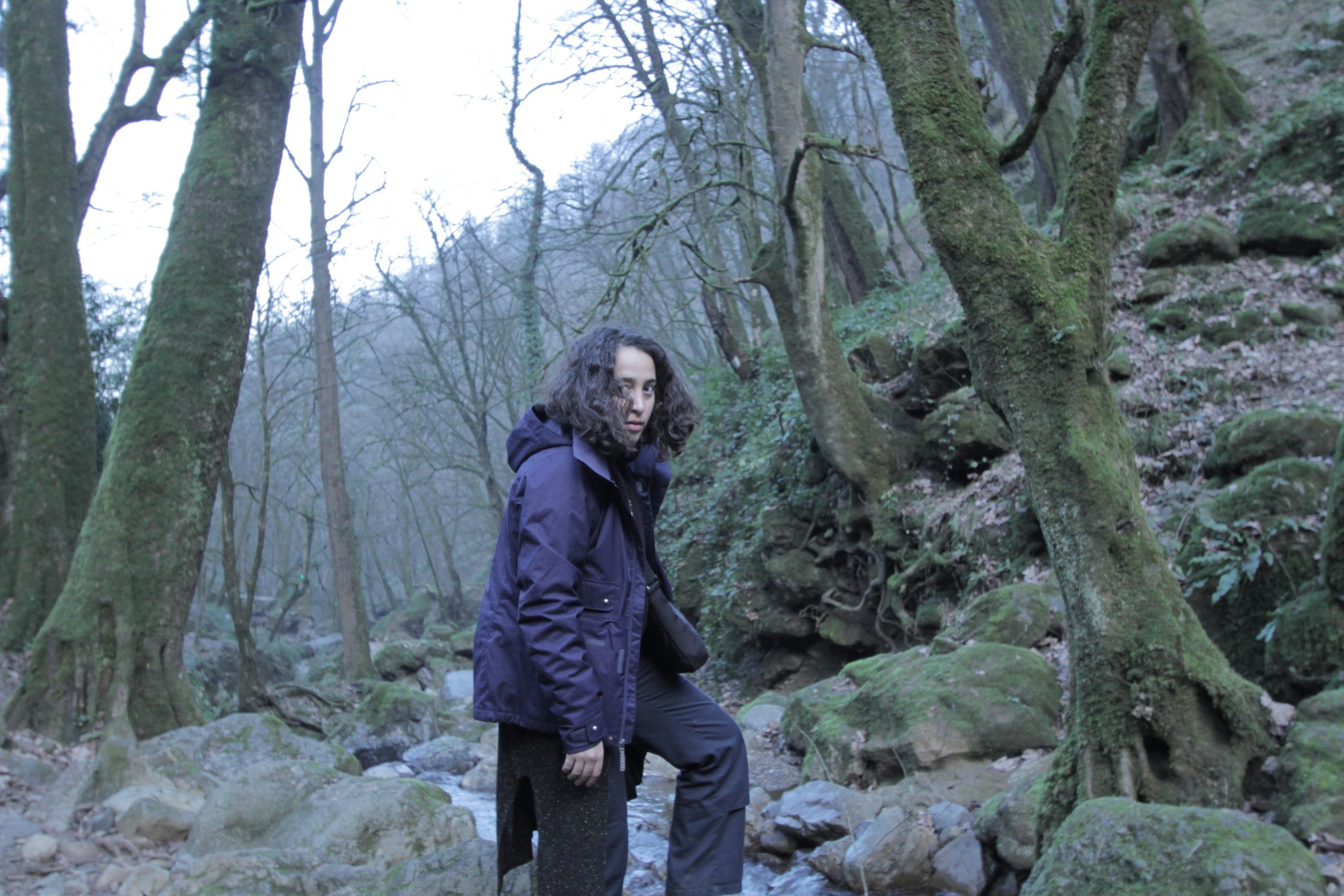
Hi, i’m Tufan
Im an Iranian multidisciplinary artist based in London whose practice revolves around poetry and spoken word.
I grew up with either a pen or a pencil in my hand. I was always drawing, always painting, or with a camera in my hand, always trying to translate the world around me into something tangible. Art was never a decision for me. It was the language I naturally existed in. That instinct eventually led me to study art formally at Central Saint Martins.
At the beginning, I saw myself entirely as a painter and filmmaker. I painted portraits obsessively, made films and took pictures of my observations of the world. But throughout my studies, my tutors kept noticing something else. Whenever I wrote alongside my work, whether it was descriptions of my photography, fragments of poetry, or reflections buried in sketchbooks and notes apps, they would stop and tell me the same thing: the writing carried a weight that affected people differently. They encouraged me to stop treating the words as secondary to the visual work and to begin framing the writing itself as the practice.
My transition into poetry happened almost accidentally.
On the first day of university, we were asked to present work we had made over the summer. I panicked because I hadn’t painted anything. While searching through my phone trying to find something, anything, I came across a poem I had written in my notes app about mosquitoes. I stood up and read it mostly to avoid getting into trouble for arriving empty-handed.
The reaction changed my life.
People responded to the poem so intensely that almost overnight I became known as “the poet.” I started performing live, and the more I performed, the stronger the response became. But while people experienced confidence when they watched me, internally I was experiencing the opposite. I had extreme stage fright. I was deeply terrified of being seen. Terrified of attention. The vulnerability of standing in front of people and exposing my inner world overwhelmed me.
That fear eventually pushed me away from the spotlight entirely.
I transitioned into film and videography because it allowed me to remain creative while existing behind the scenes, a place where I felt safer and more comfortable. Over the years I built a career as a videographer and filmmaker, helping other people shine instead. I became someone who could shape emotion, atmosphere, narrative, and identity through images and storytelling without having to place myself at the center of it.
But my art practice never disappeared.
It simply became private.
I continued writing constantly. Poems for people I loved. Poems for friends. Fragments about relationships, longing, identity, tenderness, loneliness, memory. I kept making work quietly while withholding my own voice from the public.
Then during COVID, while continuing to work in film, I moved to Iran for a year because I wanted to deepen my relationship to my culture and reconnect with my roots more fully. Living there transformed my understanding of myself. I built close friendships and relationships. My Farsi improved. I became immersed in everyday Iranian life in a way that distance had never allowed before. I gained a much deeper understanding of the emotional reality of the country and the people living inside it.
So when the massacres happened in Iran on January 8th 2026, I was not experiencing them from a distance in the same way many people in the West were. I was in constant contact with friends, relatives, and people on the ground. I was receiving firsthand accounts of fear, grief, courage, resistance, confusion, and survival from people I personally knew and loved.
At the same time, there was so little real understanding of what was happening inside Iran. So much misinformation. So much reduction of human beings into headlines, politics, statistics, or ideology. People outside Iran often did not understand what ordinary Iranians were thinking or feeling, what they feared, what they hoped for, or the scale of courage required simply to demand freedom.
I realised then that my fear of visibility no longer carried the same weight it once did. Watching people risk imprisonment, torture, and death for freedom made my own fear of being seen feel insignificant by comparison. Something shifted in me permanently. I felt a responsibility to speak. Not because I suddenly became fearless, but because silence no longer felt morally possible.
I wrote one poem after another and the response was something I never could have expected.
My poetry since then has become deeply rooted in listening.
I see myself as someone who listens carefully to the pain, humanity, contradictions, and emotional lives of other people and attempts to translate those feelings into language.
Much of my poetry now focuses on Iran, displacement, identity, grief, resistance, and collective memory. But underneath all of it, I am still writing about the same things I have always written about: love, intimacy, relationships, longing, beauty, and what it means to remain human in difficult times.